‘Het hybride handboek behandelt de inzet van AI en digitale marketing, de optimalisatie van de klantbeleving, contentcreatie en data-analyse om zo efficiënter te groeien!’
Na big data, machine learning, algoritmisch structureren en automatisch leren draait het anno 2023 om kunstmatige intelligentie en de mogelijkheid machines mensachtige vaardigheden te laten vertonen. Het management- en leerboek ‘Handboek AI voor marketing en groei’ draait om de kansen van AI op het gebied van redeneren, dataverwerking, analyseren, educatie en creatie.
Het praktische boek focust op het “wat” en “hoe”: hoe laten we AI de complexe alledaagse taken uitvoeren om werk te vergemakkelijken? Het hybride boek behandelt de inzet van AI bij de creatie en bewerking van content, het opzetten van een digitalemarketingmix, het gebruik van AI om de klantbeleving te verbeteren en data-analyse om efficiënter te groeien.
– Een hybride handboek over AI met veel digitale bijlagen op de website www.handboek.ai
– Focus op “wat” en “hoe”, kortom een praktijkgericht boek
– AI in combinatie met marketing, klantbeleving, analyses, redenering, planning, educatie en creatie.
Vreemde eend Patrick Petersen RDM MA MSc is een ervaren ondernemer, spreker en docent (aan onder andere Nyenrode Business University, Beeckestijn Business School en EURib) die het nuchtere ‘lachen en leren’ combineert in zijn inspirerende optredens. Senior online strateeg, crossmediaal marketeer, contentmarketeer, internetondernemer, internationaal spreker, docent en auteur. Hij studeerde af op divers eigen (content-) marketingmodellen die hij voor tal van internationale organisaties, zoals Heijmans, Hästens, Somfy smart home, Trendhopper holding, T-Mobile Nederland, AtMostTV, TU Delft, IKEA Nederland, MTV Europe en Coolcat, succesvol in de praktijk bracht. Petersen voltooide recentelijk masterstudies aan de London School of Business and Finance en de Geneva Business School, die hem brachten tot de integratiemodellen van doel-gerichte digitale engagement, de inzet van augmented en virtual reality en de moderne contentstrategie. Deze inzichten hebben hem tevens tot bestseller auteur gemaakt. Hij deelt graag zijn inzichten op gebied van groeien en innoveren van de marketingmix van de toekomst. Petersen is door Bureau Meltwater verkozen tot de nummer 1 contentmarketeer en top 10 marketinginfluencer. De veelzijdige Petersen komt uit een ondernemers- en acteursfamilie en is een ver verleden actief geweest als acteur in onder andere Flodder, ZwartBoek en Jackie Chan’s Who am I.
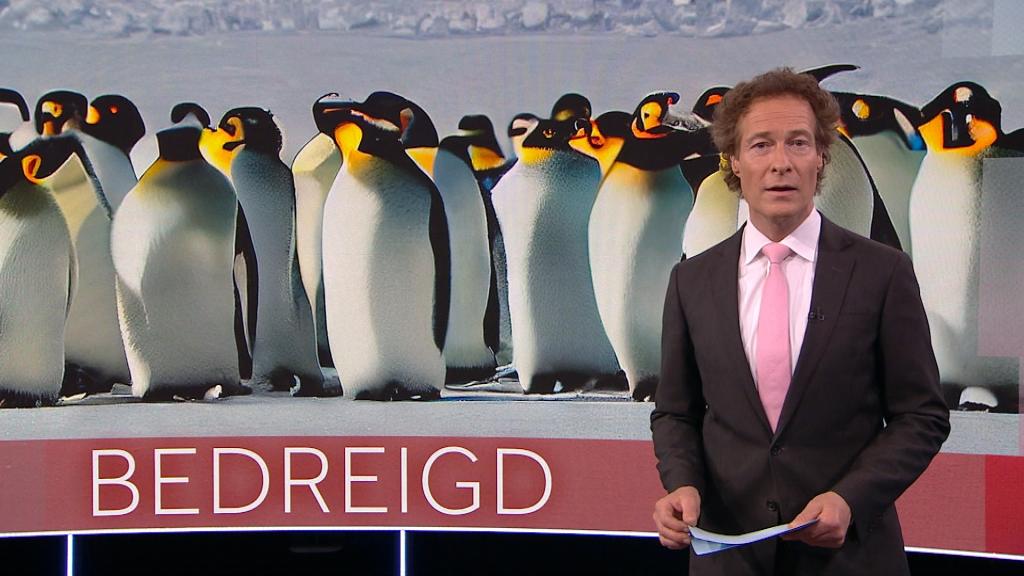
Tijdens de uitzending van het NOS Journaal van 18.00 uur op donderdag 24 augustus werd een achtergrondafbeelding getoond die in werkelijkheid niet authentiek was. De afbeelding van koningspinguïns op Antarctica bleek geen historisch archiefbeeld van deze dieren te zijn, maar eerder een gegenereerde afbeelding gecreëerd door kunstmatige intelligentie (AI).
Bij NOS Nieuws wordt altijd uiterst zorgvuldig gecontroleerd welke bronnen worden gebruikt voor nieuwsbeelden. Belangrijke vragen die worden gesteld zijn onder andere: Wat is de herkomst van de afbeelding? Hoe zeker zijn we van de tijd en plaats waarop deze is genomen? Kunnen we manipulatie uitsluiten? In geval van twijfel gaan onze experts aan het werk en voeren ze uitgebreid onderzoek uit, vaak met behulp van open-source technologieën, voordat foto’s of videobeelden worden gepubliceerd.
Gamingtechnieken veroveren aan terrein in de elektronicasector en daarbuiten. Steeds vaker zien we gamingtechnieken terug in bijvoorbeeld auto’s, op kantoren en zelfs in de revalidatiebranche en fysiotherapie. Inmiddels zijn de ontwikkelingen op het gebied van gaming bepalend voor de productontwikkeling in de hele elektronicasector. Hendrik Klingner, Product Management – PC & Sat Technologie, Luidsprekerbouw en Gaming bij reichelt elektronik, beschrijft hoe gaming een innovatiemotor voor de elektronica-industrie is geworden en alleen nog maar belangrijker wordt.
Het vooroordeel dat gamen alleen voor jonge, alleenstaande mannen met te veel vrije tijd is, is allang achterhaald. Gamen is een geliefde hobby in alle leeftijdsgroepen tot ongeveer 60 jaar. Ook de geslachtsverhouding wordt steeds evenwichtiger. Uit een nieuwe recente GfK-studie uit 2023 blijkt dat nu bijna evenveel vrouwen (48%) als mannen (52%) gamen.
Daarnaast is de game industrie de laatste jaren in Nederland sterk gegroeid. Volgens een onderzoek van de Dutch Game Garden steeg de winst van Nederlandse game bedrijven van 2019 tot 2022 met bijna 18%. In 2021 hadden zij een gezamenlijke winst van 420-440 miljoen euro. “Dit is nog maar het begin. Veel andere industrieën proberen op dit moment uit te vinden wat de game-industrie anders doet om zulke hoge groeicijfers te bereiken”, vertelt Hendrik Klingner. “Ik denk dat gaming een subtiele invloed heeft op hoe klanten verschillende facetten van hun leven willen ervaren.”
Ook in de mode-sector vindt een vergaande vorm van digitalisering plaats. Ht concept van ‘virtuele influencers’ duikt in 2022 en 2023 in de industrie op. Met deze groeiende trend stappen retailers zoals Marks & Spencer en Pacsun het digitale terrein binnen door virtuele publieke figuren in te zetten om campagnes te leiden, producten te promoten en zelfs als een uitbreiding van hun merk te fungeren. Maar wie zijn deze mysterieuze entiteiten en wat maakt dat retailers zo enthousiast zijn om met hen samen te werken?
Een ‘virtuele influencer’ wordt beschreven als een door de computer gecreëerd, fictief individu dat vaak ingezet wordt voor marketingdoeleinden, voornamelijk binnen op sociale media gebaseerde strategieën. Deze virtuele influencers kunnen variëren van onafhankelijk ontworpen avatars tot officiële merkpersoonlijkheden die verschillende facetten van het bedrijf vertegenwoordigen in de digitale wereld.
Voorbeelden van deze trend zijn te vinden bij socialemediainvloeden die zich richten op Generatie Z, zoals Lil Miquela, met 2,9 miljoen volgers op Instagram, en de Braziliaanse Lu Do Magalu, die maar liefst 6,1 miljoen volgers heeft. Deze virtuele entiteiten hebben samengewerkt met diverse merken, zoals Prada en Dior. Het onderscheid tussen deze virtuele influencers en de reguliere influencers die we kennen, is duidelijk: ze zijn het resultaat van geavanceerde technologiebedrijven. Hoewel Magalu voor het eerst opdook in 2019 en oorspronkelijk werd gecreëerd door een gelijknamig bedrijf als een manier om iBlogTV te promoten via YouTube, werd Lil Miquela in 2016 gelanceerd als een Instagram-project door ontwikkelaars Trevor McFredries en Sara DeCou.
Deze videotutorial legt het gebruik van spel-AI in Pac-Man uit.
Hieronder een video met de AI-script die toont hoe de spoken Pac-Man achtervolgen:
De Pac-Man Projects zijn ontwikkeld voor de introductiecursus Kunstmatige Intelligentie aan de Universiteit van Californië, Berkeley. Ze passen een reeks AI-technieken toe op het spelen van Pac-Man. Deze projecten zijn niet gericht op het bouwen van AI voor videospellen. In plaats daarvan leren ze fundamentele AI-concepten, zoals geïnformeerde staat-ruimte zoekalgoritmen, probabilistische inferentie en versterkend leren. Deze concepten vormen de basis voor toepassingsgebieden in de echte wereld, zoals natuurlijke taalverwerking, computervisie en robotica:
We hebben deze projecten ontworpen met drie doelen voor ogen. De projecten stellen studenten in staat om de resultaten van de toegepaste technieken te visualiseren. Ze bevatten ook voorbeeldcode en duidelijke instructies, maar dwingen studenten niet om zich door overmatige hoeveelheden hulpstructuren te worstelen. Tot slot biedt Pac-Man een uitdagende probleemomgeving die creatieve oplossingen vereist; echte AI-problemen zijn uitdagend, en dat geldt ook voor Pac-Man.
In de cursus hebben deze projecten gezorgd voor een toename in inschrijvingen, positieve beoordelingen van het onderwijs en betrokkenheid van studenten. De projecten zijn op Berkeley meerdere semesters lang getest, verfijnd en foutloos gemaakt. Ze zijn nu klaar om ze beschikbaar te stellen aan andere universiteiten voor educatief gebruik.
Het INTERNATIONAL JOURNAL OF CREATIVE RESEARCH THOUGHTS – IJCRT instituut heeft een paper geschreven met analyse van de inzet van AI bij het spel Pac-Man:
This project is about developing pacman game with AI..The Game Pac-Man is a very challengingvideo game that can be useful in conducting AI(Artificial Intelligence) research. Here, the reason we have implemented various AI algorithms for pacman game is that it helps us to study AI by using visualizations through which we can understand AI more effectively. The main aim is to build an intelligent pacman agent which finds optimal paths through the maze to find a particulargoal such as a particular food position, escaping from ghosts. For that, we have implemented AI search algorithms like Depth first search, Breadth first search, A*search, Uniform cost search. We have also implemented multi-agents like Reflex agent, Minimax agent, Alpha-beta agent .Through these multiagent algorithms, we can make pacman to react from its environmental conditions and escape from ghosts to get high score. We have also done the visualization part of the above AI algorithms by which anyone can learn and understand AI algorithms easily. For visualisation of algorithms, we have used python libraries matplotlib and NetworkX(used to draw graphs for the states explored). Index Terms – Pacman, maze, DFS, BFS, UCS, A*Search, Reflexagent, Minimaxagent, alpha-betapuning, visualization, Networkx, matplotlib.
I. INTRODUCTION Pac-man is a maze arcade game developed and published by Namco in 1980. The player supervise Pac-man, who must eat all the dots inside an surrounded maze while keeping away from the four colored ghosts. Eating huge flashing dots called power pellets changes the ghosts to turn blue, allowing Pac-Man to consume them for bonus points. Pac-Man was a critical and commercial victory, and has an commercial and cultural legacy. The game is supreme and influential, and it is often listed as one of the extraordinary video games of all time.
II. RELATED WORK Veenus Chhabra et al. [1] expressed the brief explanation of Game theory. through this we showed some characteristics of game. The algorithm is developed for using smaller indices so that there is less complication for guessing the tack number and then determining as we follow color indexing through number and assign. Also, we can also execute the game to begin from initial by not only getting “6” at dice but also with “1”. We can also restrict that to “two” only. As we get continuous “three” “6”, the turn is altered without any move of token.
III. METHODOLOGY Algorithms: The structure include implementation of AI search algorithms and Adversial search(Multiagents). The following are the search algorithms performed: 1. Depth First Search 2. Breadth First Search 3. Uniform Cost Search 4. A* Search The following are the adversial search algorithms that are performed: 1. Reflex Agent 2. Minimax Algorithm 3. Alpha-beta Pruning
SEARCH ALGORITHMS: 3.1 Uninformed Search Algorithms: Uninformed search is a class of common search algorithms which control inbrute force-way. Uninformed search algorithms do not have added instruction about state orsearch space other than how to move the tree, so it is also called blind search. 3.1.1 DFS: Depth-first search is a circular algorithm for traversing a tree or graph data structure. It is called the depth-first search because it begins from the source node and go along with each path to its greatest depth node before operating to the following path. DFS utilize a stack data structure for its execution. The procedure of the DFS algorithm is related to the BFS algorithm. Time Complexity: Time complexity of DFS will be similar to the node traversed by the algorithm. It is specifiedby: T(n)= 1+ n2+ n3 +………+ n m=O(nm) (1) Where, m= maximum depth of any node and this can be much big than d (Shallowest solutiondepth). Space Complexity: DFS algorithm require to reserve only single path from the root node, hence space complexity ofDFS is equivalent to the size of the fringe set, which is O(bm). (2)
Space Complexity: Space complexity of BFS algorithm is specified by the Memory size of frontier which is O(bd). (4)
3.1.3 UNIFORM COST SEARCH: Uniform-cost search is a searching algorithm used for traversing a weighted tree or graph. This algorithm approach into play when a dissimilar cost is available for each margin. The primary aim of the uniform-cost search is to discover a path to the aim node which has the lowest cumulative cost. Uniform-cost search enlarge nodes according to their path costs form the root node. It can be used to resolve any graph/tree where the optimal cost is in demand. A uniform-cost searchalgorithm is executed by the priority queue. It offers highest priority to the lowest cumulative cost. Uniform cost search is equal to BFS algorithm if the path cost of all edges is the identical. Time Complexity: Let C* is Cost of the optimal solution, and ε is each step to get near to the aim node. Thenthe number of steps is = C*/ε+1. Here we have taken +1, as we start from begin 0 and end toC*/ε. Hence, the worst-case time complexity of Uniform-cost search isO(b1 + [C*/ε])/. (5) Space Complexity: The same logic is for space complexity so, the worst-case space complexity of Uniform-costsearch is O(b1 + [C*/ε]). (6) 3.2 Informed Search Algorithms
3.2.1 A* SEARCH ALGORITHM: A* search is the most frequently known form of best-first search. It uses heuristic function h(n), and cost to reach the node n from the begin state g(n). It has collaborate features of UCS and greedy best-first search, by which it resolve the problem efficiently. A* search algorithm discover the direct path through the search space using the heuristic function. This search algorithm enlarge less search tree and provides optimal result quick. A* algorithm is close to UCSexcept that it uses g(n)+h(n) instead of g(n). In A* search algorithm, we utilize search heuristic as well as the cost to reach the node. Hence we can merge both costs as following, and this sum is called as a fitness number. f(n)=g(n)+h(n) f(n)=estimated cost of the cheapest solution g(n)=cost to reach node n from start state h(n)=cost to reach from node n to goal node At each point in the search space, only those node is enlarge which have the small value of f(n), and the algorithm terminates when the goal node is found. Time Complexity: The time complexity of A* search algorithm depends on heuristic function,and the number of nodes enlarge is exponential to the depth of solution d. So the timecomplexity is O(b^d), where b is the branching factor. Space Complexity: The space complexity of A* search algorithm is O(b^d) (7) 3.3 Adversial Search Algorithms:
3.3.1 REFLEX AGENT: We produce here a reflex agent which pick out at its turn a random action from the legal ones. Note that this is non identical from the random search agent, since a reflex agent does not construct a series of actions, but select one action and performs it.This reflex agent selects its present action based only on its current perception. The ReflexAgent computes the results of the states reachable with these steps and choose the states that outcome into the state with the highest score. In case more states have the highest score, it will select randomly one.
3.3.2 MINIMAX ALGORITHM: In case the world where the agent plan of action ahead includes other agents which plan against it, adversarial search can be used. One agent is called MAX and the other one MIN. Utility(s; p) offers the _nal numeric value for a game that close in terminal state s for participant p. For example, in chess the standards can be +1, 0, ½. The game tree is a tree where the nodes are game states and the edges are moves. Optimal decisions in games must give the finest move for MAX in the beginning state, then MAX’s moves in all the states proceed from each possible response by MIN, and so on. Minimax value make sure optimal strategy for MAX.
. REFERENCES [1] Chhabra, Veenus and Kuldeep Tomar. “Artificial Intelligence : Game Techniques Ludo-A Case Study.” (2015). [2] Villacis Silva, Cesar & Fuertes, Walter & Santillán Trujillo, Mónica & Aules, Hernán & Tacuri, Ana & Zambrano, Margarita & Salguero, Edgar. (2016). On the Development of Strategic Games based on a Semiotic Analysis: A Case Study of an Optimized Tic-Tac-Toe. 425-432. 10.5220/0005772904250432. [3] Learning To Play the Game of Chess – Sebastian Thrun, University of Bonn, Departmentof Computer Science III, Romerstr. 164, 0-53117 Bonn, Germany. [4] S. Karakovskiy and J. Togelius, “The Mario AI Benchmark and Competitions,” in IEEE Transactions on Computational Intelligence and AI in Games, vol. 4, no. 1, pp. 55-67, March 2012, doi: 10.1109/TCIAIG.2012.2188528. [5] D. Koller and B. Milch (2003): Multi-agent influence diagrams for representing and solvinggames. [6] P. Stone and M. Veloso (2000): Multiagent systems: a survey from a machine learningperspective. [7] Y. Shoham and K. Leyton-Brown (2008): Multiagent systems: algorithmic, game theoretic,and logical foundations,Cambridge University Press. [8] Banerjee, Niranka & Chakraborty, Sankardeep & Raman, Venkatesh. (2016). Improved Space Efficient Algorithms for BFS, DFS and Applications.